
ЦАП Sabre ES9038PRO crystek cchd-575 + muse03 * 2 + muse02 * 2 + Amanero
Довольно долгое время я пользовался ЦАП купленным у китайского магазина Inntak на Sabre ES9018 + 2x Muses8920 + 2xAD797 + 2 R-Core. В качестве приемника USB в нем был установлен XMOS, которым я не пользовался, так как в моей системе источник цифры находится довольно далеко от усилителя и ЦАП и поэтому я передаю цифру по коаксиалу. XMOS китайцы больше любят в силу того, что он беспроблемен в плане передачи DSD-потока, с Amanero в этом вопросе есть некоторые моменты. Что касается звучания транспортов, то мне очевидно, что Amaero имеет лучший звук, более живой. ЦАП Inntak был великолепный, сверхвоздушный, детальный, с такой пространственностью, что все время казалось, Что кто-то включил эффект эха для лучшей передачи объема помещения.
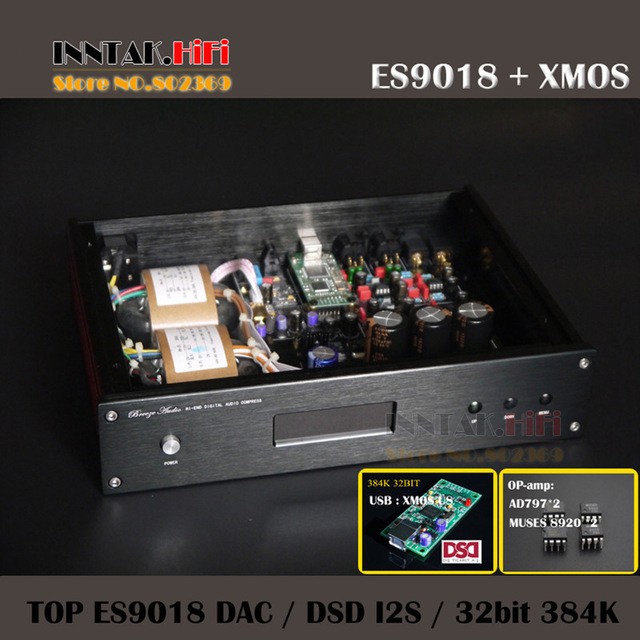
Теперь на смену моему ЦАП пришел новый претендент — в принципе это все тот же старый знакомый, но на более дорогих компонентах.
Во первых сам чип уже последнего поколения Sabre ES9038PRO — это так-же, как и ES9018 — флагман линейки.
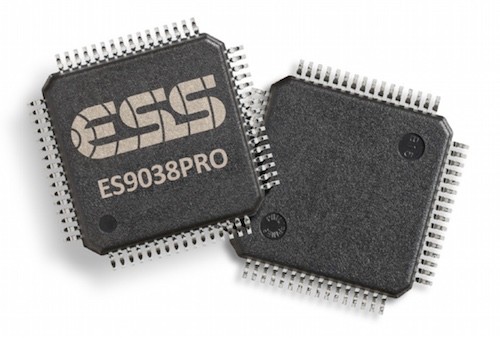
Конечно конфигурация самого ЦАП (не чипа) пережила глобальные изменения, поэтому мне сложно вычленить какой именно элемент влияет на звук, но общее впечатление — что 9038 и 9018 не одно и тоже. Различия этого видятся во встроенных в чип алгоритмах. Если раньше они были намертво зашиты в чип и вы могли только переключать их, пытаясь, понять, что изменилось (на слух неуловимо), то в 9038 фильтры можно перепрограммировать и те 8 фильтров что в комплекте имеют различие (не все конечно).
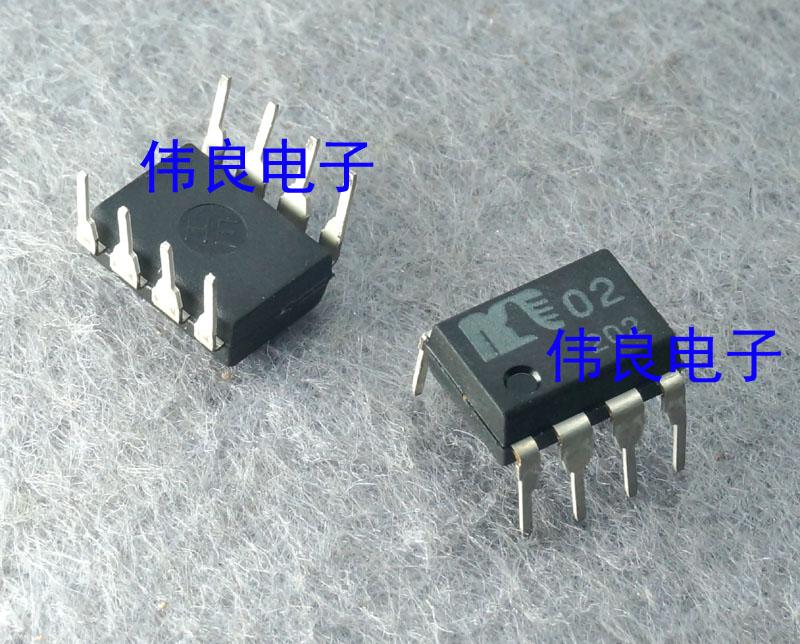
Далее в обозреваемом ЦАП более качественные для аудио и дорогие операционные усилители- пара Muses02 и пара Muses03.
Мне сообщали, что такая связка будет далеко не оптимальной в техническом плане, поэтому немного волновался за звук, но оказалось напрасно.
Muses02 — это двухканальный биполярный операционный усилитель. Скорость нарастания 5 v.
It is the best for audio preamplifiers, active filters, and line amplifiers with excellent sound.
Muses03 — это J-FET (читай мосфет) одинарный операционный усилитель с скоростью нарастания сигнала 35 вольт. Искажения 0.00003% (3 миллионных).

The MUSES03 is a high-quality sound J-FET input single operational amplifier for premium audio equipment.
Оба созданы для Hi-End аудио, что указано в даташит в той или иной мере.
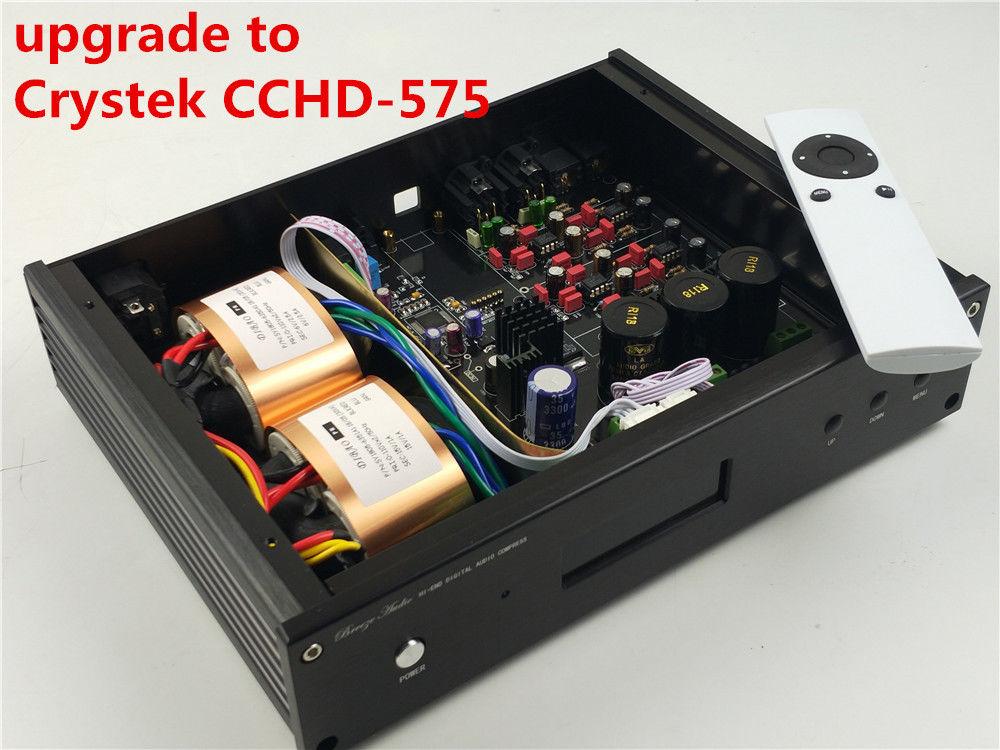
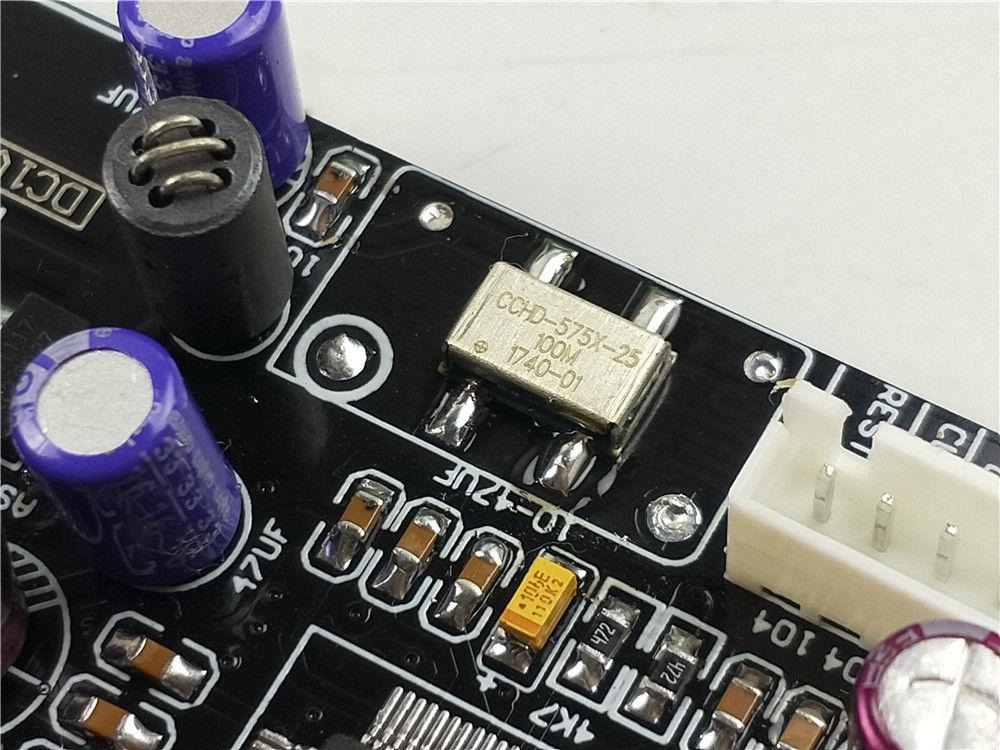
Далее в качестве апгрейда вместо золотых TXCO установлены более дорогие Сrystek cchd-575.
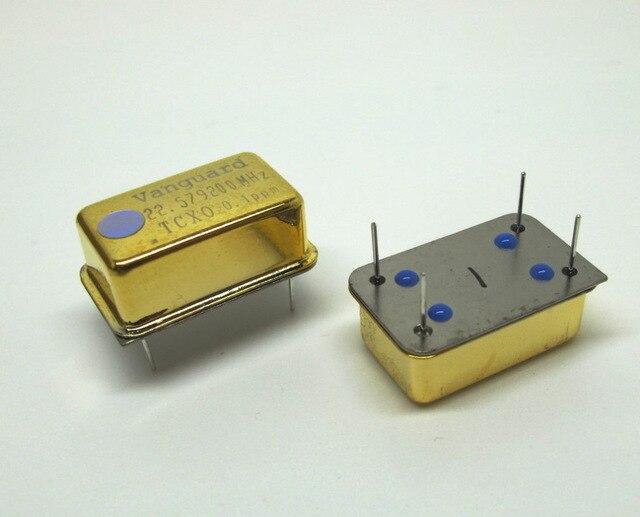
Мне предлагали поставить еще более дорогой клок добавив 35 долларов, но отказался.
Далее в конфигурации два трансформатора R-Core к которым в ЦАП-ах я благоволю больше, чем к торам.
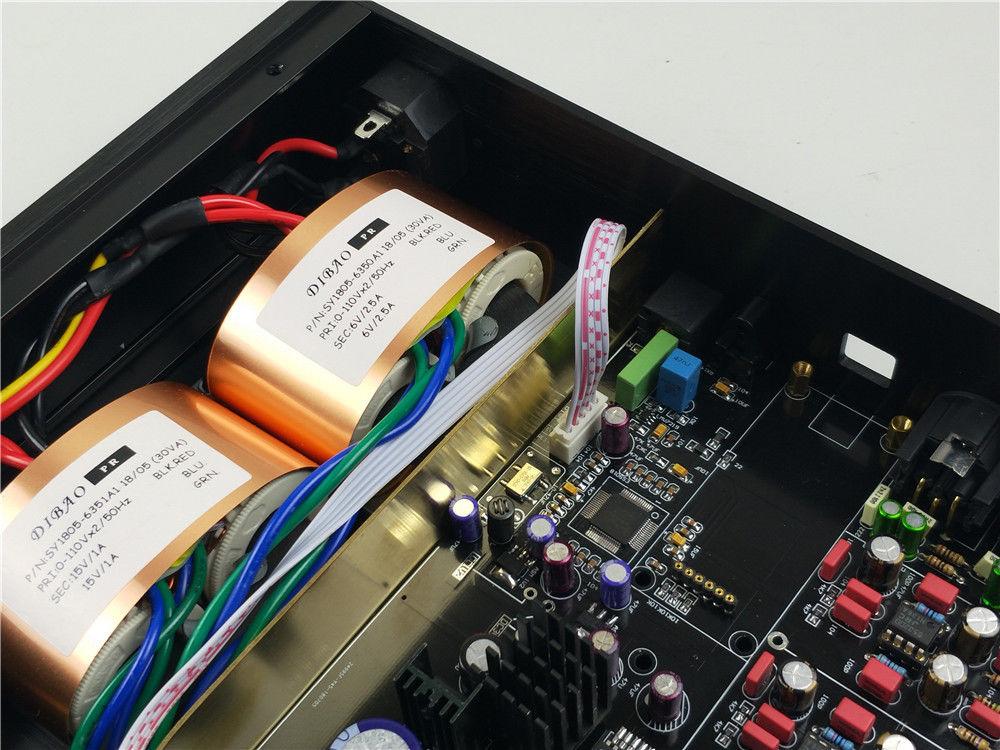
Когда я получил ЦАП, то стандартно потряс его и почувствовал, некое движение внутри, как и ожидалось после длительных транспортировок. Двигались трансформаторы. Я подкрутил недостаточно сильно затянутые болтики (попутно найдя один бесхозный внутри корпуса), но на немного свободное колыхание трансформаторов это не повлияло. Тогда я обратил внимание на металлические ушко раскоряченные в разные стороны — именно они и держали трансформаторы — смотрите фото, соответственно более жестко их и не закрепить с таким видом крепежа.
Сразу же обращает внимание, что трансформаторы экранированы сами (медная оболочка) и экранированы от основной платы металлической перегородкой.
Транспорт я попросил установить Amanero китайского производства по финансовым причинам — у меня был уже китайский Amanero и его способности меня более чем устраивают. Мне неоднократно сообщали, что оригинальный итальянский Amanero (это транспорт) лучше, пространственно более объемный.
ЦАП — апгрейд-версия от китайского магазина, на этот раз, MSHOW.
ПЕРВОЕ ВКЛЮЧЕНИЕ
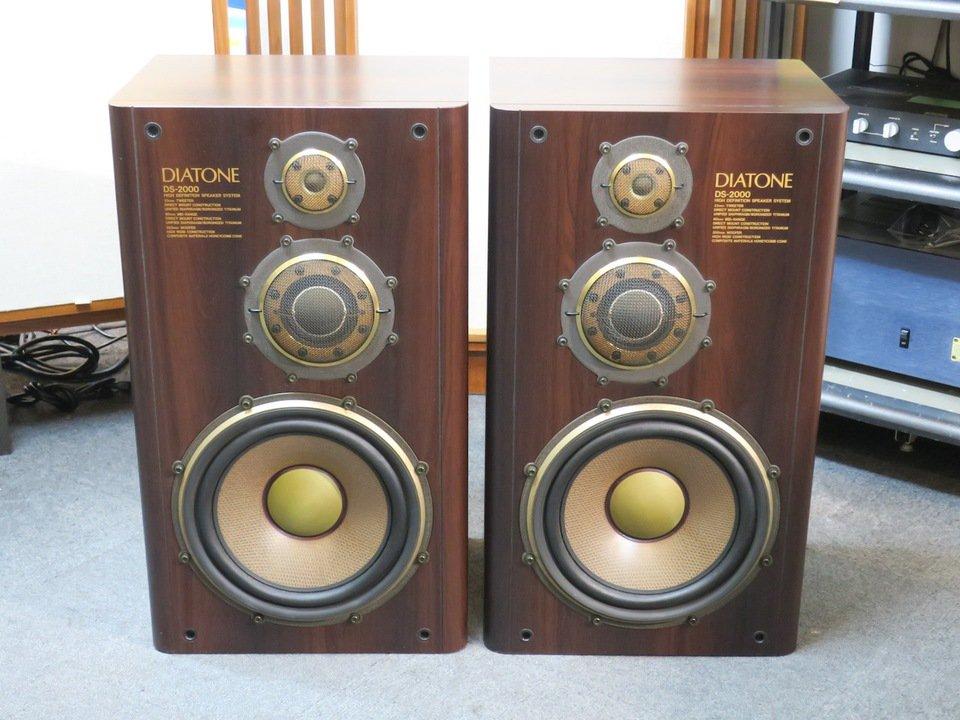
Подключил я ЦАП Sabre ES9038PRO crystek cchd-575 + muse03 * 2 + muse02 * 2 + Amanero стандартно по коаксиалу к усилителю мощности Yamaha P2200 и акустическим системам Diatone DS-2000. Эта связка без проблем должна показать потенциал.
Главные мои тревоги — это боязнь получить звук хуже, чем звучал мой прежний ЦАП Inntak, который был дико трехмерный и воздушный.
Включив Sabre ES9038PRO crystek cchd-575 + muse03 * 2 + muse02 * 2 от MShow Store в первые минуты я услышал, что звук высококлассный, но был слегка разочарован, так как не видел сильной разницы с обычным вариантом на Muses8920. Это длилось до того момента пока не зазвучала акустическая гитара в композиции, где я оказался поражен богатством звучания. Это было настолько музыкально при высокой детализации и микродинамики, и при этом все создавало еще один слой (не микродинамический), который влиял на слитность звучания — фантастически красиво.
Но еще больше получить от ЦАП я смог вспомнив, что по фильтрам Sabre9038pro уже совсем не то, что Sabre ES9018.
Когда я начал переключать режимы фильтрации и дошел до варианта Slow-SL я потерял дар речи, настолько красиво зазвучала акустическая гитара, возникли естественные звуки (какие-то удары по тарелочкам, струнам), что возник эффект присутствия, который я наблюдал только на ламповых или гибридных усилителя в каких-то конкретных местах фонограммы. Но ламповые решения слишком компромиссные в плане точности звука, а здесь жила жизнь и при этом с показывала музыку сверхдетально и при этом сверхслитно, как бы противореча себе.
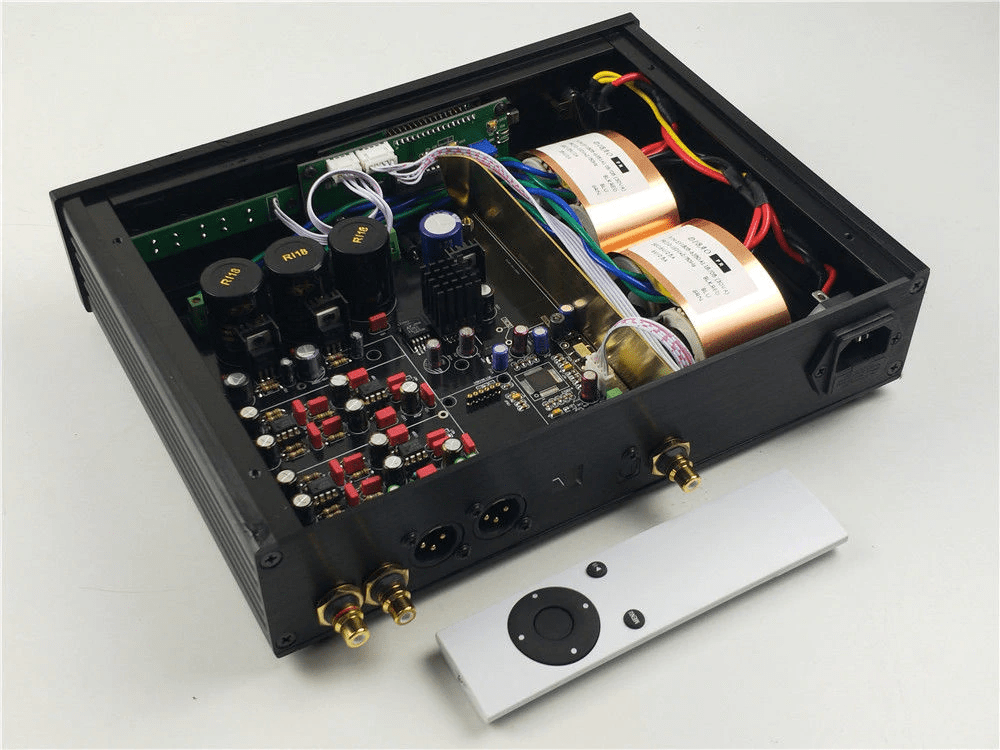
В силу того, что вы читаете первый предваритиельный обзор, то будем следить, находить новые нюансы звучания. Что касается различий между прежним ЦАП-ом от Inntak и этим от MShow, то ЦАП-ы разные, каждый со своей особой изюминкой — причина этого в ОУ или самих микросхемах 9038/9018 затрудняюсь сказать. Могу только сказать, что ЦАП на Muses02+03 класс звучания еще более высок без сомнений.
В ЦАП Inntak, мне кажется, больше ощущение трехмерности-локализации, помещения.
В ЦАП MShow акцент делается на фантастическую слитность звучания при дико высокой детализации, как следствие текстура звучания становиться явно богаче и интереснее — уже не просто пространство 3Д, а потрясающая по увлекательности аудиопостановка за которой следишь с открытым ртом.
В итоге от прослушивания от ЦАП оказался в восторге, тем интереснее существование на рынке этой модели ЦАП, как утверждается, с еще более высокого класса Hi-END дискретными решениями вместо ОУ.
Предлагаю вам посмотреть видеоролик с ЦАП Sabre ES9038PRO crystek cchd-575 + muse03 * 2 + muse02 * 2 от MShow — звук записан на стереорекордер Zoom H1 в формате wav 48кГц/24, потом в программе видео-редакторе Openshot совмещен в видео в формате ogv, где звук 48кГц (сколько бит не знаю, надеюсь тоже 24) в формате flac. После чего это залито на ютуб, и что он сделал со звуком, в какой формат пережал, остается только гадать.
Звучит Sabre ES9038PRO MShow:
В записи использованы две композиции разных исполнителей с одного СД-диска (!) на которых видео демонстрирует различие в качестве звучания. Одна композиция более взвешенная, другая более яркая — все это результат мастеринга на этапе записи музыкантов звукорежиссером.
А следом не помешает вспомнить как звучал ЦАП от Inntak, правда с более прозрачной акустикой Yamaha NS-1000.
Смотрим Inntak на Sabre ES9018:
Оба ЦАП-а безусловно роскошные, но на Muses-ах 02+03 + фильтр — это другой уровень восприятия, хотя и менее объемный, с мощным уклоном в естественность.
Почему цапы в китайском исполнении не звучат?
Приветствую! Купил китайскую плату — цап на чипе ES9038Q2M. Схему нашел в интернете, и решил попробовать допилить, чтобы оно лучше звучало. У знакомого есть цап Apogee, на таком же чипе, он был взят за эталон, т.к. там всё сделано по уму. 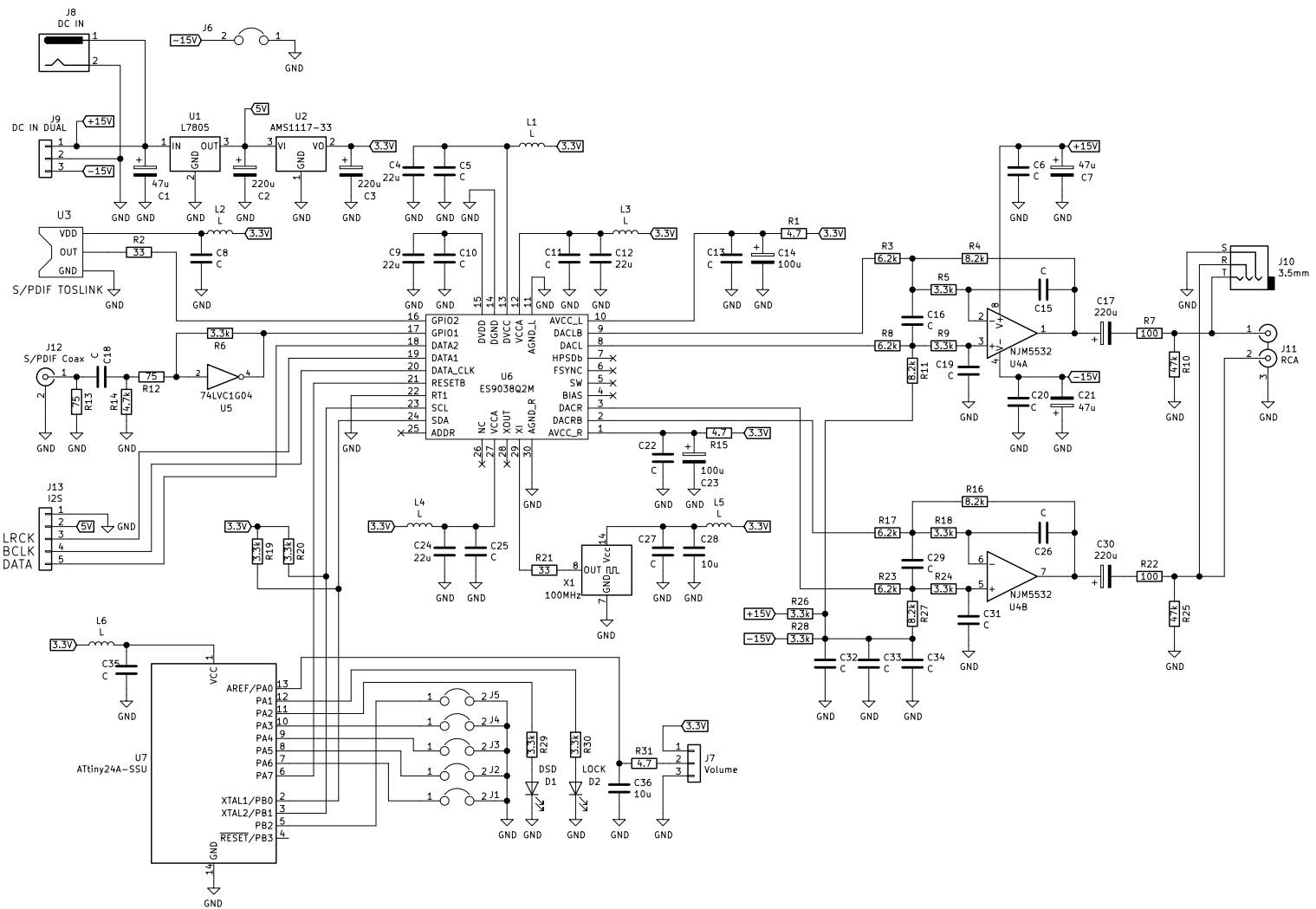
Первым делом разорвал связь выхода цапа с усилителем, и подключил цап на вход внешнего усилителя для наушников. От этого звук стал гораздо лучше, но до уровня фирменных дорогих цапов, на том же чипе ему как до луны.
Начитавшись форумов, сделал вывод, что питание очень важно для цапов, и решил сделать совсем по аудиофильски, а именно пять стабилизаторов на 3,3 вольта, чтобы аналог, цифра, микроконтроллер и кварцевый генератор питались отдельно, каждый от своего стабилизатора. И всё это запитал от автомобильного аккумулятора. Все электролиты по питанию увеличил до 1000 мкф.
От этой доработки результат вообще нулевой. Может на измерительных приборах это даст эффект, потому что было всё запитано от одного стабилизатора, но на слух вообще ничего.
Для сравнения Apogee на том же чипе звучит в разы круче. Подключали оба устройства к ушному усилителю и прослушивали в наушниках. Разница между ними — космос.
Разобрали Apogee, чтобы посмотреть, а чего там такого наколдовали, чтобы оно так круто звучало. Рассчитывали увидеть кучу деталей, сложную схему, но ничего такого. Возникает вопрос, а чего такого сделали в дорогом устройстве, чтобы оно так хорошо звучало, и как это повторить на этом китайце?
Может ли быть сам чип не оригинальный, или отбраковка? Меня на эту мысль наводит цена чипа, который на маусере стоит немного дешевле, чем вся китайская плата целиком.
Вариант с питанием отпадает, а что еще можно сделать, я не знаю.
С аналоговой техникой более-менее дружу, а вот в цифре полный ноль. 
А вот так выглядит сама плата. Подключал к компу, через USB.
Конвертер USB — I2S на отдельной плате Amanero 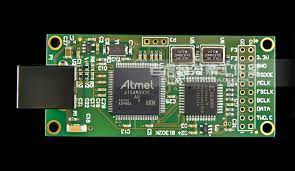
P.S. кроме этого чипа, у меня еще две платы, на PCM5102 и ES9018K2M, и все они звучат одинаково плохо.
На каком бы чипе китайцы не собрали — получается примерно одинаково плохой звук.
А нормальные фирмы пилят отлично звучащие устройства на этих чипах.
Так что же делать? Ну не карма же это китайская на них!
ЦАП или DAC на ES9038 Q2M
Долго выбирал среди недорогих ЦАП или DAC и пока остановил свой выбор на китайской плате с чипом ES9038 Q2M.
Приобрёл на Алиэкспресс: http://bit.ly/2H653w7
На момент покупки стоил с доставкой около 2300 руб.
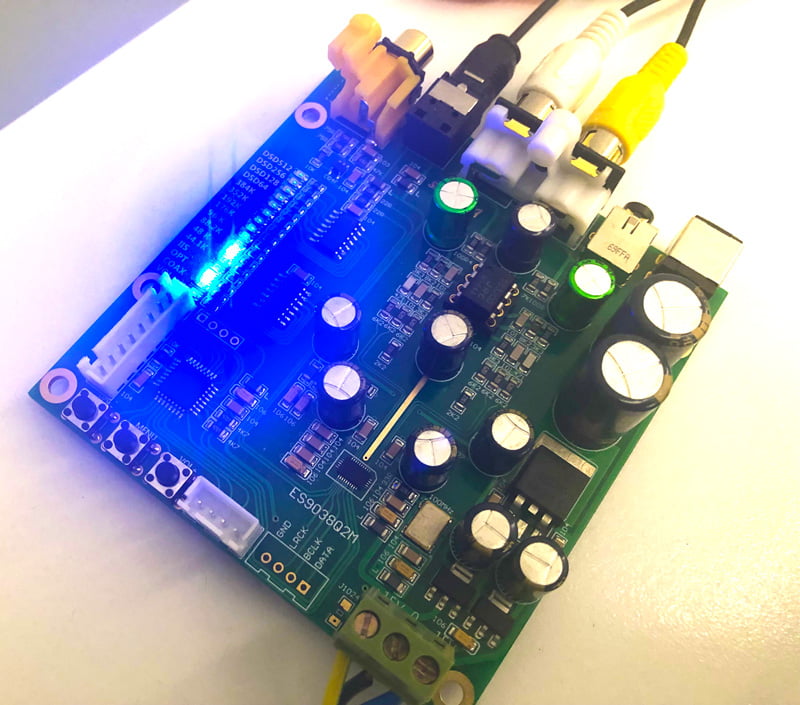
Китайский Цап ES9038Q2M.
До этой платы была плата на таком же чипе ES9038Q2M, но другая версия от другого продавца: http://bit.ly/2EAWJTt
Преднамеренно приобретал в OEM версии без корпуса, хотел «недорого» попробовать несколько версий чипа ES9038, ES9028, ES9018, Q2M и pro версий.
Ранее слушал emu 0404 и 1616, звук с macbook pro, fx audio d802 и еще пару недорогих ЦАП и хороших аудиокарт.
Первую карту на ES9038 Q2M использовал с обычным DC блоком питания. Звук был лучше чем d802 и macbook, но в верхних частотах были слышны сильные помехи.
Поэкспериментировав с джамперами, настройками, заменой проводов и т.д. особых отличий в качестве не заметил. Карту вернул т.к. было подозрение на брак (оказалось, что ЦАП был исправен).
Новый ЦАП на ES9038 Q2M выбирал с поддержкой «двойного» питания. Сразу приобрел правильный блок питания с трансформатором и LM317, LM337: http://bit.ly/2VnLjI3
Теперь мой современный HiFi ЦАП выглядит так:
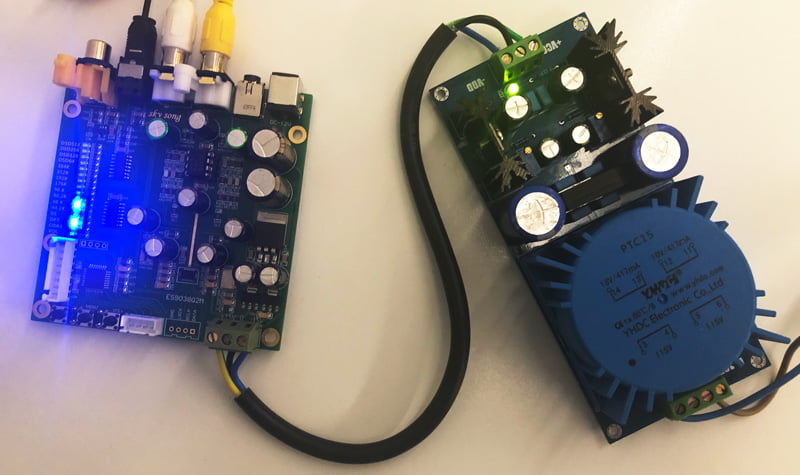
DAC или ЦАП на ES9038 Q2M чипе с блоком питания.
Звуком вполне доволен, эта конструкция переиграла все то что я слышал до этого. Особенно удивило насколько чистым стал звук после использования не обычного DC питания, а блока упомянутого выше. Пропали помехи в верхах, звук стал «прозрачней». Самое интересное, что замена проводов, замена операционных усилителей и т.д. не давали такой разницы какую удалось получить с помощью «правильного HiFi блока питания». Лучшее вложение 1800 руб. �� Сейчас хочу цап и блок питания упаковать в корпус, но об этом и подробнее о HiFi на ES9038 расскажу в ближайшем видео.
Archimago’s Musings
A ‘more objective’ take for Rational Audiophiles. Among other topics!
Twitter: @Archimago
E-Mail: archimagosmusings(at)outlook.com
[Some items linked to my Amazon Affiliate account — I may receive gift certs from qualifying purchases.]
Saturday, 4 June 2022
REVIEW: S.M.S.L. DO100 DAC (dual ESS ES9038Q2M) [Part I — Overview, Filters & Jitter]. (And the likely continued contraction of MQA. )
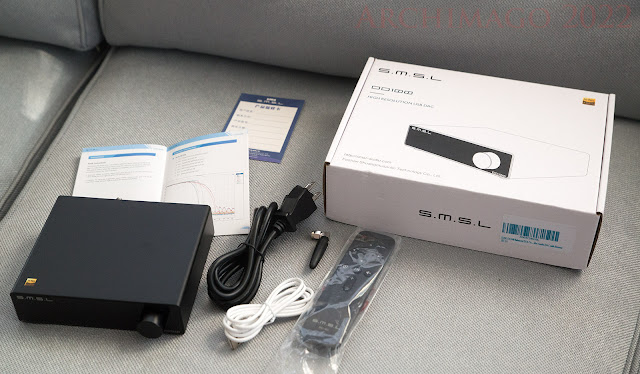
Over the last number of years, we have seen a proliferation of DACs from Chinese manufacturers offering models of increasingly better resolution — higher fidelity — and greater feature set. These days, I am of the opinion that we have achieved way above and beyond the ability for human hearing to differentiate these machines unless the manufacturers purposely added some kind of «coloration» to the analogue output whether it be frequency response or changes to the noise and distortion levels (the «tube sound» being a prototypical example we may come across).
As you can see in the image above, we have the S.M.S.L. DO100 DAC (
US$250) in today for review. I bought this unit through retail channels and intend to either use it myself or give it away if I have no need for it.
For many devices these days, opening the manual will show us technical information like the frequency response of the filters in this example. I think this is a nice evolution among manufacturers recognizing that showing product performance is important to educated customers with graphs and technical details rather than mere prose which often provides little satisfaction for the consumer’s intellect.
Today, let’s start a multi-part look at this DAC; no need to hurry because I think the performance at this price point warrants serious consideration and the many ways and features one can gather performance metrics on (I don’t promise to test everything of course!). Obviously it’s not an expensive device, has a remote controller, has both unbalanced RCA and balanced XLR outputs, Bluetooth 5.0 input, capable of up to 32/768 PCM and DSD512 (1-bit, 22.6MHz) using USB 2.0, along with S/PDIF TosLink and Coaxial inputs for up to 24/192 and DoP DSD64. No money wasted on MQA licensing. Depending on what we find, this might be right for you.
I. Hardware Overview
As a DAC, this device internally uses dual ESS ES9038Q2M DAC chips. These Q2M chips have become quite popular with many mobile and desktop applications thanks to the fact that they are low-power chips yet provide excellent performance from the dual channels; each chip capable of stereo or mono operation. They are the «little brother» of the top-of-the-line ES9038Pro with 8 channels. And like the ES9038Pro, these Q2M’s also can function in both voltage and current modes.
Just as the chips are like the little sibling to the top-of-the-line device, the way the SMSL DO100 is designed is reminiscent of the design of the Topping D90SE we talked about last year. The idea here is similar; both are driving the DACs in current mode, and both are using high quality TI OPA1612 opamps for current-voltage conversion (I/V C). A difference of course being that the DO100 only requires 4 sets instead of the 8 found in the D90SE.
I didn’t open up the DAC, but the company’s advertising material shows this which I’ll take the liberty of reproducing here:

Based on the datasheet, these ES9038Q2M chips are rated as THD+N -120dB, and DR 129dB(A) when operating in differential current mode. Any DAC capable of this level of performance assuming everything else like linearity, frequency response, and jitter look good will already place the device in the upper echelon of the highest performance DACs out there.
Here’s a further look at the DAC unit:


That’s quite compact with both gold-plated RCA and XLR outputs. Input over Bluetooth (Qualcomm QCC5125), coaxial/TosLink S/PDIF, as well as modern USB-C (XMOS U208-based). There’s also a 3-prong grounded IEC; great if you want to try some high-end audiophile approved power cables. 😉
Regarding the power supply, it’s obviously integrated inside and is described as a low-noise linear design. When turned on, I’m seeing a continuous 5W on the Kill-A-Watt meter which drops to <1W when turned off / put into sleep mode.
Press and hold down on the control knob to turn on / off. You can also use the control knob to change menu items and click to either register a change or toggle between parameters — all quite intuitive. Parameters include which digital input, filter settings FL1-7, DPLL 1-9 jitter tolerance (higher values might be needed to increase S/PDIF tolerance for some devices like TVs, I think my default was 3), UAC1/2 (use UAC2 mode for modern hi-res USB 2.0 performance with DSD), and screen brightness 1-5.
[DPLL refers to the «Digital Phase Lock Loop» which is part of the «Jitter Eliminator» circuit. This parameter adjusts the bandwidth for the timing of the input signal in order to maintain a lock. With highly jittery sources like say an old CD transport, if you hear crackles or pops, you might need to push the value higher. It has been said that keeping this value as low as possible (ie. keeping at 1) could improve sound quality. I have not personally been able to verify this. I’m guessing this parameter is only meaningful for the S/PDIF inputs.]
Here’s the remote control, labeled as an «S.M.S.L. RC-8C» which takes 2 AAA batteries. It’s a typical IR unit with good range, no problems used in my sound room. Matte finish, rounded contours:

Power, volume (levels from 0-99) and input buttons would be the most utilized. FN will blank the screen, and the mute button works as expected; the display will show a blinking volume number to remind you of mute being on.
II. Oscilloscope & Digital Filter Options
Let’s begin the measurements with a look at the RCA output into the digital oscilloscope:

Left and right channels are basically perfectly overlaid indicating excellent channel balance. This is with 2Vrms RCA output, with XLR output, voltage will double to 4Vrms.
Let’s throw up some -3dBFS 1kHz 16/44.1 square waves:

Left channel (yellow) is a bandlimited 16/44.1 square, and on the right channel (cyan) we have a non-limited square wave showing the «ringing» due to the digital filter. This was done with filter FR6 which is the linear fast roll-off filter hence the symmetrical pre- and post-ringing at the edge transitions.
This of course leads us to discussing the digital filters. Because there’s no MQA here, there’s also no need to worry that the settings might change during use. Furthermore, there are no concerns that the DAC might end up using any of the degenerate low-quality MQA variants.
There are a total of 7 filters you can choose from and as per the manual, they are:
The manual shows this graph of the relative frequency responses:

That’s a great start. However, we can look deeper into the filter options with the «Digital Filter Composite» (DFC) overlay graphs I’ve shown over the years (an extension of Juergen Reis’ ideas).
Here are the first three «FL1-3» filter options:
As you can see, I’ve embedded the impulse response into the top right of each DFC plot for the first 3 filters.
And here are the last four filters — «FL4-7»:

These basically look like the default filters described in the ES9038Q2M datasheet except for a change in the order being presented. Here’s IMO the more logical order laid out in the datasheet along with the corresponding SMSL setting:
The ESS sequence makes sense because the first 4 are the «typical» options most people would probably use (linear/minimum and fast/slow roll-off), and then the last 3 gets us outside of the norm with apodization and intermediate phase options. Not sure why S.M.S.L. felt they needed to change the ordering.
Great to see that «absolute polarity» has been maintained as per the intentionally positive-pointing impulse responses.
Note that all of the filters showed intersample overload with the 0dBFS Wideband White Noise signal. This basically means that the filters do not provide a full +3dB overhead to cover most of the overload situations we might run into. This is quite common among DACs using the built-in chip filters. While these 7 filters are similar to the ES9038Pro as used in the Topping D90SE, the Topping/ES9038Pro is doing a better job with controlling intersample overload (as evidenced by the cleaner 0dBFS wideband white noise curves).
I didn’t pay attention to which of the filters was the default (possibly FL1 which is pretty good with some characteristics like «goldilocks»). As a technically accurate audiophile, I like FL6 «Linear Fast Roll-Off» as being one with good frequency extension, sharp roll-off, minimal ultrasonic imaging, and linear phase (best temporal performance without phase shift).
As usual, filter preference can be a subjective or idiosyncratic choice; for example some people like NOS which would be technically poor for example.
III. Jitter
Let’s move on to jitter.
I’ve left the DPLL setting as 3 on the SMSL DO100 DAC, the E1DA Cosmos ADC was set to capture at 32/192, using SpectraPlus-SC software at 1M-point FFT. Let’s have a peek at the standard 16-bit (44.1kHz) and 24-bit (48kHz) J-Tests using USB input:

That looks excellent. Essentially ideal J-Test performance suggesting no jitter worth mentioning at all.
Let’s have a look at the S/PDIF inputs — TosLink optical and Coaxial. As a standard over the years, I’m using my Squeezebox Touch’s S/PDIF to feed the DAC:

I’m impressed by the excellent J-Test result from the TosLink and Coaxial S/PDIF inputs!
Given how good it all looks above, while it has been awhile since I’ve shown this, let’s accelerate the J-Test to 96kHz with the primary signal at 24kHz:

Wow, still excellent even with the S/PDIF interfaces! We can start barely making out a pair of sidebands at this accelerated sampling rate.
Okay, let’s take it up another notch. Here’s the J-Test accelerated even further to 192kHz samplerate, primary signal now up to 48kHz**:

Finally we see some notable sidebands around the primary signal. Impressive that the TosLink interface was able to maintain the 192kHz speed with no issues (Squeezebox Touch loaded with Enhanced Digital Output applet).
The lack of any meaningful difference between USB and S/PDIF on the J-Test is simply excellent performance. I played around with the DPLL setting and could not see any difference whether I used the default of 3 or the extremes at 1 and 9. (I did not see a difference either with the DPLL setting on the SMSL M100 Mk II measured awhile back.)
For comparison, I ran the extreme 24/192 J-Test with a few of my other DACs that I also know have reasonably low jitter:

The Topping D10 Balanced has a similar pair of +/-1kHz jitter sidebands although higher in level compared to the SMSL DO100. From previous testing we know that the Topping DX3 Pro tends to show a number of sidebands already at 44.1/48kHz and continues to do so at 192kHz. The RME ADI-2 Pro FS (AKM AK4490 DAC) pattern is clearly quite different with more of an irregular «skirt» at the base of the primary signal, suggesting varying amounts of low-level jitter. Regardless, the jitter sidebands are all below -120dB from the peak of the 48kHz primary signal which in itself would be inaudible.
Anyhow, all of this is consistent with the idea that jitter these days isn’t really a problem with decent DACs — at all — regardless of what talking points some manufacturers and magazine writers want to claim they can hear! Talk is cheap — demand some kind of demonstration if people are going to insist on this and that being significant.
** To double check that running the J-Test at 192kHz, those sidebands I saw were not simply artifacts from the E1DA Cosmos ADC, I had a look at a 48kHz 24/192 tone without the J-Test 1kHz LSB square wave jitter modulation tone:

As you can see, without the stimulatory effect of the LSB modulation tone, we do not see those sidebands. Although the J-Test was created back in the days of testing AES/EBU and S/PDIF digital interfaces, we can still see jitter effects with USB digital transmission using this signal.
IV. Summary so far.
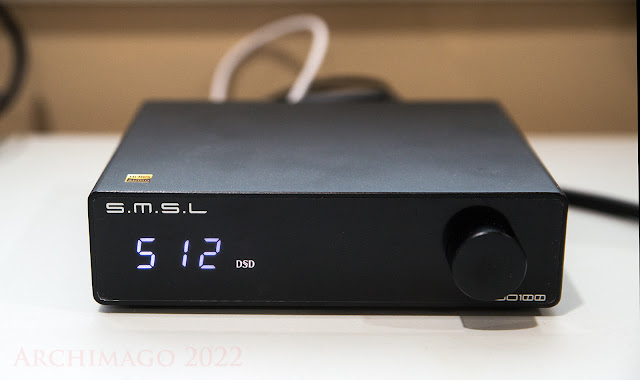 |
| Clean, understated appearance with large sample rate display and DSD indicator. |
Okay, wrapping up the first part on the S.M.S.L. DO100 DAC, we have here a device with excellent channel balance, and superb low-jitter performance whether it’s USB or S/PDIF inputs. Certainly one of the best I have come across over the years.
The digital filter settings appear to be the standard options when looking at the ES9038Q2M data sheet. They’re not perfect and all show a certain amount of intersample overloading which is common except for a few DACs, so feel free to use high quality software upsampling (Roon, HQPlayer) or apply some volume normalization like ReplayGain to attenuate excessively «hot» recordings. Another option is to just drop the output to «96» (max 99) using the volume control which will preserve overhead. To be honest, while we can discuss and show intersample overload technically, in practice it’s not generally an issue with real music. The only time this might add to distortion in the sound quality is when we’re playing excessively loud, likely distorted and clipped waveforms to begin with (these would usually not be considered «audiophile quality» masterings anyhow).
So far then, this is looking quite good!
Next week, in Part II, we’ll delve deeper into the resolution of this DAC.
In other news, since I mentioned the Topping D90SE (US$900) above, I noticed that they’ve now released the Topping D90LE (US$800). Basically, you save about $100 by not getting MQA; money well saved IMO since the feature is worthless unless you subscribe to the $20/m TIDAL tier or still buy those questionable MQA-CDs from Asia.
Speaking of MQA-CDs in Asia, about a year back in May 2021, Bob Stuart wrote this article claiming around 600 MQA-CD titles have been released and linked to Newspeak» where «ignorance is strength» or something like that.
Obviously the CD market is nowhere as vibrant as it used to be, but even then, in the last year, it doesn’t look like MQA-CD is growing in any significant way. The only CD player (other than the discontinued Oppo UDP-205) that I’ve seen here in North America that can handle MQA-CD is the Technics SA-C600; not exactly a large enough library worth buying an expensive player for! This, plus MQA only being available in TIDAL on their more expensive tier now I think all leads to the obvious conclusion that we’re well along in a state of contraction for MQA unless I’m missing some other remarkable source of encoded content in the world.
At its peak in 2000, even HDCD had something like 5000 titles available! I highly doubt MQA will even approach that kind of number. Thank goodness.
If you like your female «audiophile recording» vocalists, check out Vanessa Fernandez’s I Want You (2019, DR12). A good mix of covers that I think will show off your audiophile systems. Also a good hybrid SACD if you’re still collecting those!
All the best, dear audiophiles. I hope you’re enjoying some nice music and experiencing the excellent fidelity of devices these days without wondering if you need to mortgage a home! 😉