
Hub motors
by Chris Woodford . Last updated: December 9, 2021.
W e’re so used to the idea of cars being, well, car-shaped, that we find any other body layout extraordinary. But there’s no real reason why a car has to have an engine at the front, a trunk at the back, and a passenger compartment stuck in the middle. Nor is there any good reason why the passenger zone—the most important part of a car for most of us—has to take up only half the total space. Cars look the way they do largely for historical reasons: they’ve always been built that way. What if we could do away with the bulky, gasoline engine entirely and devote more room to the passengers and their cargo? That’s one of the exciting possibilities that opens up if you use hub (in-wheel) motors (compact electric motors built into each wheel) instead of engines. Let’s take a closer look!
Photo: The inner of a hub motor is a «brushless» motor like this made up of electromagnetic copper coils. The coils, which remain static, generate a magnetic field that makes another part of the motor (not shown here) spin around them. In other words, a hub motor is a brushless motor like this built inside the hub of a car or bicycle’s wheels.
Contents
- What are hub motors?
- How does a hub motor differ from an ordinary motor?
- How does a brushless DC (BLDC) motor work?
- What are the advantages of hub motors?
- What are the problems with hub motors?
- A brief history of hub motors
- Find out more
What are hub motors?
If you’ve read our main article on electric motors, you’ll know the basic idea of turning stored electricity into motive power: feed an electric current through tightly coiled wire that sits between the poles of a magnet and the coil spins around making a force that can turn a wheel and drive a machine.
Most electric-powered vehicles (electric cars, electric bicycles, and wheelchairs) use onboard batteries and a single, fairly ordinary electric motor to power either two or four wheels. But some of the latest electric cars and electric bicycles work a different way. Instead of having one motor powering all the wheels using gears or chains, they build a motor directly into the hub of each wheel—so the motors and wheels are one and the same thing. That’s what we mean by a hub motor.
Photo: Left: The hub motor of an electric bike. Right: Take it apart and what you’ll see is a bit like this brushless motor from a PC cooling fan. Note the thick copper coils of wire that convert electric power from the battery into the movement that pushes you along.
How does a hub motor differ from an ordinary motor?

Photo: One of the aluminum mesh wheels from NASA’s lunar roving vehicle, an electric car used on the Moon in the early 1970s, with tires made from zinc and steel. Though not exactly hub motors as such, each wheel was nevertheless powered by its own separate 10,000 rpm electric motor. Photo by courtesy of NASA Marshall Space Flight Center (NASA-MSFC).
The basic idea is just the same. In an ordinary motor, you have a hollow, outer, ring-shaped permanent magnet that stays static (sometimes called the stator ) and an inner metallic core that rotates inside it (called the rotor ). The spinning rotor has an axle running through the middle that you use to drive a machine. But what if you hold the axle firmly so it can’t rotate and switch on the motor? Then the rotor and the stator have no choice but to swap roles: the normally static rotor stays still while the stator spins around it. Try it with an electric toothbrush. Instead of holding the plastic case of your toothbrush (which, broadly speaking, connects to the static part of an electric motor), try holding only the bristles and then turn on the power. It’s quite tricky to do, because the brush moves so fast, but if you do it right you’ll find the handle slowly rocks back and forth. This is essentially what happens in a hub motor. You connect the central, normally rotating axle to the static frame of a bicycle or the chassis of a car. When you switch on the power, the outer part of the motor rotates, becoming a wheel (or wheels) that powers the vehicle forward.
How does a brushless DC (BLDC) motor work?

Photo: A small brushless DC motor taken from a computer’s floppy disk drive and seen from outside (top) and inside (bottom). Bigger versions of these images are available on our Flickr page.
Ordinary electric motors use a mechanical device called a commutator and two contacts called carbon brushes to reverse the electric current periodically and ensure the axle keeps turning in the same direction.
Hub motors are typically brushless motors (sometimes called brushless direct current motors or BLDCs), which replace the commutator and brushes with half-a-dozen or more separate coils and an electronic circuit. The circuit switches the power on and off in the coils in turn creating forces in each one that make the motor spin. Since the brushes press against the axle of a normal motor, they introduce friction, slow it down, make a certain amount of noise, and waste energy. That’s why brushless motors are often more efficient, especially at low speeds. Getting rid of the brushes also saves having to replace them every so often when friction wears them down.
Here are some photos of a typical brushless DC motor. First, look at the fully assembled motor shown in the top picture. In a normal motor, you’d expect the inner coil to rotate (it’s called the rotor) and the outer magnet to stay static (that’s called the stator). But in this motor, the roles are reversed: the inner part with the coils is static and the gray magnet spins around it. Now look inside and you can see exactly how it works: the electronic circuit sends power round the nine copper coils in turn, making the gray outer case (which is a magnet split into a number of sections, bent round into a circle) spin around the copper coils and circuit board (which remain static).
How does the circuit know which of the nine coils to switch on and off—and when? You can’t really see in this photo, but there are several tiny magnetic field sensors (known as Hall-effect sensors) positioned between some of the coils. As the permanent magnets on the outer rotor sweep past them, the Hall-effect sensors figure out where the north and south magnetic poles of the rotor are and which coils to activate to make it keep spinning. The trouble with this is that it means the motor does need an electronic circuit to operate it, which is something you don’t need for an ordinary DC motor.

Photo: A PC fan motor (the same one shown in the photo higher up the page) is a simpler, cruder, and cheaper design than the one used in a floppy or hard disk drive: the static part has just four coils. All it has to do is blow cool air over a computer’s processor chip, so there’s no need to worry about position sensing and precision control; that’s why there are no Hall-effect sensors on the circuit board.
What are the advantages of hub motors?
It depends whether you’re talking about an electric bicycle or an electric car. Adding a hub motor and batteries to a bicycle is a mixture of pro and con: you increase the bicycle’s weight quite considerably but, in return, you get a pleasant and effortless ride whenever you don’t feel like pedaling. Where electric cars are concerned, the benefits are more obvious. The weight of the metal in a typical car (including the engine, gearbox, and chassis) is perhaps 10 times the weight of its occupants, which is one reason why cars are so very inefficient. Swap the heavy engine and gearbox for hub motors and batteries and you have a lighter car that uses energy far more efficiently. Getting rid of the engine compartment also frees up a huge amount of space for passengers and their luggage—you can just stow the batteries behind the back seat!

Photo: An artist’s impression of the lunar roving vehicle sketched out in 1969. The emphasis was on making a fold-up vehicle light enough to take to the Moon. Electric power was not only a practical choice: with no air in space to power an internal combustion engine, it was the only real option. Photo by courtesy of NASA Marshall Space Flight Center (NASA-MSFC), with yellow highlights added to the wheels.
Vehicles powered by hub motors are a whole lot simpler (mechanically less complex) than normal ones. Suppose you want to reverse. Instead of using elaborate arrangements of gears, all you have to do is reverse the electric current. The motor spins backward and back you go! What about four wheel drive? That’s quite an expensive option on a lot of vehicles—you need more gears and complicated driveshafts—but it’s very easy to sort out with hub motors. If you have a hub motor in each of a car’s four wheels, you get four-wheel drive automatically. In theory, it’s easy enough to make the four motors turn at slightly different speeds (to help with cornering and steering) or torque (to move you through muddy or uneven terrain).
What are the problems with hub motors?
Handling
Hub motors are bigger, bulkier, and heavier than ordinary wheels and change the handling of an electric car or bike: they increase the unsprung mass (the mass not supported by the suspension), theoretically giving more shock and vibration, poorer handling, and a bumpier ride. That’s the common wisdom, anyway. In practice, engineers have found that vehicles with hub motors simply need to have their suspension «tweaked» to compensate for the extra unsprung mass, and this can even lead to an overall improvement in handling.
Safety
The sudden failure of a single hub motor could cause a vehicle to slew to one side, which is why practical hub motors are sometimes made up of several (typically four) independent sub motors, each producing a fraction (a quarter) of the overall torque. That’s a much safer design, but it does add to cost and complexity. Even so, the two or four motors in hub-motor electric cars still have to be synchronized so that any major failure in one motor can be compensated for in one or more of the motors on the opposite side.
Mechanical stress
Unlike a conventional engine or electric motor, high off the road and cosily sheltered inside the engine compartment, hub motors have to survive in a much more extreme environment. As we’ve just noted, they’re unsprung, so they’re subject to huge amounts of vibration, and they also have to survive high-speed impacts from rocks and stones. Down by the road, they have to cope with huge extremes of temperature (freezing cold from the outside air, boiling hot from sudden braking), and getting completely submerged in water or snow. Can hub motors last as long as traditional engines or electric cars with a single, central motor?
Compatibility
Isolated hub motors are something of a futuristic ideal. For the time being, hub motors are more likely to be retro-fitted to existing cars, so they have to work with existing friction brakes, suspension systems, and so on. That can mean design compromises that undermine some of the advantages of using hub motors in the first place.
Torque
Another problem is delivering just the right amount of torque (turning force). A gasoline engine works best turning over quickly (making lots of revolutions per minute), no matter what speed you’re actually doing on the road. You use a gearbox to convert the engine’s high revs into high torque (and low speed) or high speed (and low torque) depending on whether you’re starting off from a standstill, racing along the freeway, driving slowly uphill, or whatever. Hub motors have to be able to produce any combination of speed and torque without a gearbox ; they usually work by «direct drive.» But there’s a snag: in electric bikes, they sit inside the hub, at the very center of a relatively large, spoked wheel. If you turn the center of a wheel, its diameter works as a lever, multiplying the speed at the rim but reducing the torque by the same amount (see our article on how wheels work for an explanation). To get enough torque, you need quite a powerful motor—but not so powerful that it accelerates you too quickly and jerkily or snaps your spokes!

Artwork: Using internal gears to increase torque in an electric bike hub motor. In this design, you can see the brushless motor on the left, with its coils (red) and the magnets (blue) that spin around them. The motor powers the main bike axle (light blue) through one or more gears (yellow) and is controlled by an electronic circuit board (green). All these components are picked inside the hub (the outer limits of which are shown by the largest blue circle) and you can clearly see where the spokes attach to the rim. Artwork from US Patent 6,321,863: Hub motor for a wheeled vehicle by Chandu R. Vanjani, Mac Brushless Motor Company, 27 November 2001, courtesy of US Patent and Trademark Office (with colors added to the original for clarity).
Hub motors typically achieve more torque by increasing the hub size quite significantly (a bigger stator and rotor make more torque than smaller ones); you can see from the electric bike photo up above that the powered hub in an electric bike is considerably bigger than the unpowered hub in an ordinary bike. Some hub motors boost their torque with internal gearboxes (typically an arrangement of planetary (epicyclic) gears in between the stator and the rotor), but since that adds weight, cost, mechanical complexity, and potential unreliability, many do not. Bigger torque brings an added problem: you need to be sure the rest of your wheel is strong enough to cope with the twisting forces a hub motor can deliver, particularly if you’re converting something like an ordinary bicycle wheel into a powered wheel. The spokes on an electric bike are shorter and leave the hub at a tighter angle, which can stress them further. Suppose you mount an electric motor on the hub of a basic bike and switch on the power. Since you weigh quite a lot and there’s plenty of friction between the tire and the ground, the motor could simply bend the spokes instead of moving you along the ground! So an electric bicycle typically needs stronger wheels (perhaps with stronger and more elastic spokes, different positioning of spoke holes, a thicker rim, or some other fix) than an ordinary one.
Hub Motor vs. Mid-Drive E-Bikes — Which One to Choose?
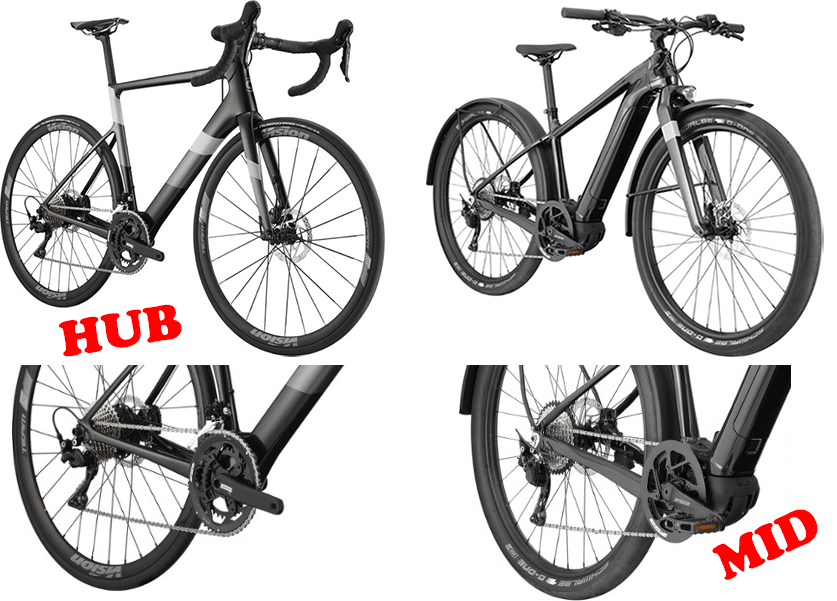
When electric bikes began being mass-produced, manufacturers used an electric motor placed in the hub of the rear wheel to power the bike, this is known as a hub motor. Even today, many electric bikes are equipped with hub motors, particularly at the lower end of the price scale.
However, with advances in research and technology, many bike manufacturers now choose to use mid-drive motors, in some of their higher-priced bikes. These are placed in the center of the bike, usually hidden away in the downtube or above the bottom bracket.
Hub motor vs mid-drive motor — the biggest debate in the e-Bike world!
In this article we’ll be discussing the key differences between the two main eBike motor types, so you can make an informed decision on which motor type might best suit you and your riding needs.
You may also like:
- Mid-Drive Electric Bike Selection: 11 Models to Consider in 2023
What Are Hub and Mid-Drive Motors?
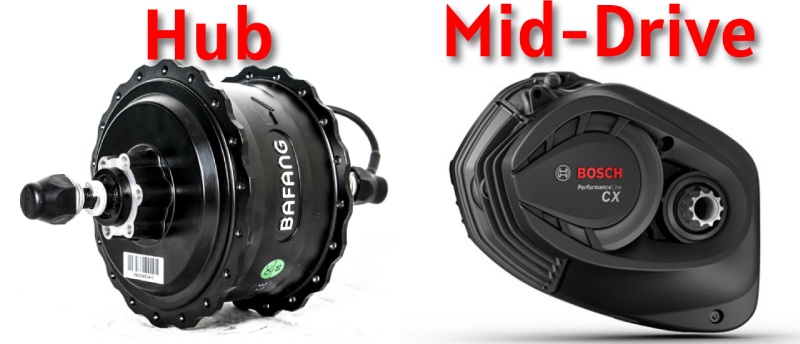
Hub-drive motors
Also known as direct-drive, geared motors are preferred by those requiring more torque, and a more affordable price tag. More weight on the rear wheel means better torque conversion. The downside to rear hub motors is the difficulty of removing the wheel from the bike, and the uneven weight distribution.
Commonly found on: Commuter, folding, hunting, entry-level, throttle eBikes.
Mid-drive motors
Also known as center-driven a.k.a mid-drive motors are found on many mid-to-high-end electric bikes due to their lightweight and optimized, smooth power transition. Aesthetically, mid-drive bikes have generally no visible battery placed outside of the frame.
Commonly found on: Mid-to-high end eBikes. eMountain, eRoad, eGravel, eHybrid, etc.
Hub Motor vs. Mid Drive Motors Explained
Hub Motors PROs
 Affordable.
- Plenty of torque.
- Can be retrofitted to most bikes.
- Throttle-assist is widely available.
- Can be retrofitted to some carbon frames.
- Power-throttle can still be used in case the chain brakes.
- Suitable for beginner cyclists as there’s the throttle option.
- Bike starts rolling from 0mph when its got an throttle option.
- Pedal-assist sensor needs the crank to spin in order for the motor to work (In case the chain snaps).
Hub Motors CONs
- Heavy.
- Consumes more power than mid-drives.
- Cases of motor failures due to excessive torque.
- Need for a visible controller and a pedal-assist sensor.
- Removing the rear wheel for a tire change can be complicated.
- Weight distribution is not as great as most of the weight of the bike is at the rear wheel.
- Hub-motor bikes are generally cheaper, therefore the bike spec is often built to match and save money.
- Wheel spokes can work themselves loose over time as the power transition goes straight to the rear wheel.
Mid-Drive Motors PROs
- Quiet.
- Lightweight.
- Long-lasting.
- Better gear ratio.
- Suitable for towing.
- Stronger components.
- Better torque at slower speeds.
- More torque at the same wattage.
- Better optimized power efficiency.
- Easier maintenance on moving parts.
- Torque sensors instead of pedal-assist sensors.
- Operate efficiently at a natural pedaling cadence.
- Easier to remove the rear wheel for a tire change.
- Smooth power transition – natural ride experience.
- Better aesthetics as the motor is integrated into the frame.
- Improved weight distribution as the weight is at the center of the bike.
Mid-Drive Motors CONs
- Throttle options are uncommon.
- Not as powerful kick to the ride (lower torque).
- Expensive since the whole bike frame is built around the mid-drive motor.
- In case of the chain snaps, there is no throttle-assist rendering the drivetrain useless.
- Suitable for experienced cyclists as you’ll have to pedal more to get efficient speed for optimized pedal-assisted range.
Hub vs. Mid-Drive: Main Factors to Consider When Choosing
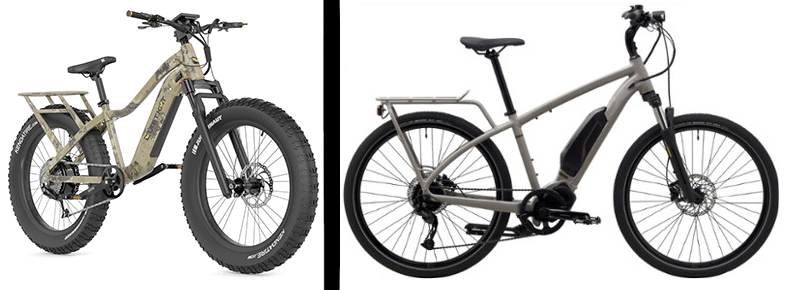
$2,799 Rear Hub Motor QuietKat Ranger vs $1,999 Mid-drive Co-op Cycles eCTY
Besides the two main differences in design and price, these two main motor types offer different ride qualities as well.
When choosing an electric bike, there are a handful of main features you’ll want to look at in order to directly compare different models, and make an informed decision on your purchase.
1. Motor
2. Range
3. Price
1 . Motor Type
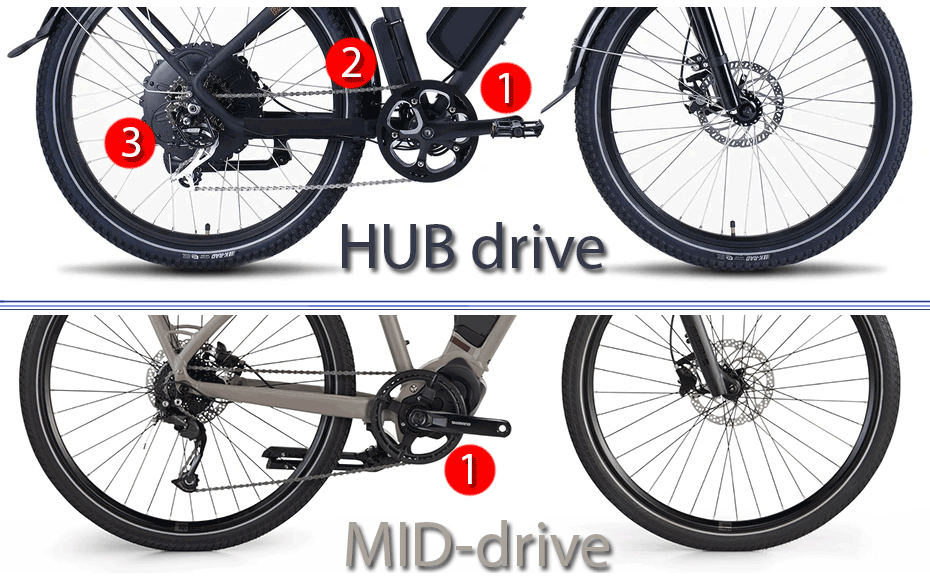
Power transition – Hub motor – 1. Pedal-assist sensor 2. Controller 3. Motor | Mid-drive – the power is directed straight to the motor.
One of the most important factors when choosing an electric bike is the type of motor they are built around.
- Rear hub motors = Generally more affordable, good torque levels, but not as economical.
- Mid-drive motors = Start from around $2,000 (Exception – $1,500 BUZZ eBikes). More optimized power output, better weight distribution through the bike.
1 . 1 Power & Torque
What does it all mean?
The electric bike motor power determines the amount of torque, maximum speed, and optimized power output – i.e. economic mode vs high torque available for the bike. Higher-end motors are better optimized for certain riding modes, while cheaper motors provide the torque in a more “wide-open” style which results in a shorter range.
Expensive hunting e-bikes (Like the QuietKat Ranger at the top) use a rear hub motor as they have more torque at lower speeds and steep climbs. Also the more weight on the rear equals to more traction going up the hills.
Snapping a chain on an eBike is more likely on a mid-drive motor as the stress & tension of the chain is not as optimized all around the drivetrain as it is on a hub drive motor.
On the other hand, the majority of the best ebikes for hills come with mid-drive motors because they make climbing easier and more intuitive.
1.2 Batteries & Motor Power
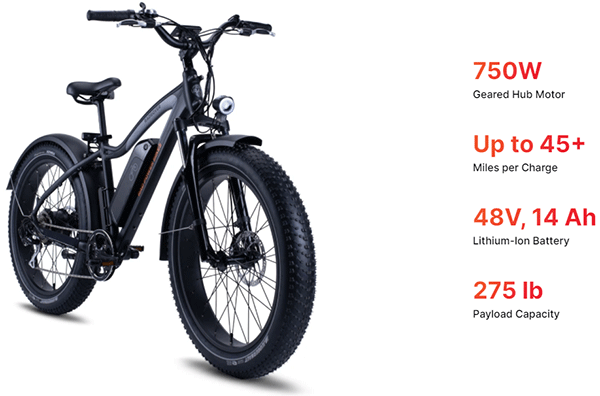
A . 48V, 14 ah – (672Wh) battery, 750W motor (100Nm Torque)
B . 48V, 11.6 ah – (557Wh) battery, 750W motor (80Nm Torque)
C . 48V, 14 ah – (672Wh) battery, 750W motor (80Nm Torque)
This means that the battery (say, 14Ah) provides power at 14amps for one hour, or at 7amps for two hours.
A . 48V x 14ah = 672Wh (Battery Capacity) + 750W (Motor Power) + 100Nm (Determined by the motor model and configuration) = Most powerful, best torque.
B . 48V x 11.6ah = 557Wh + 750W + Nm = Most economical, while weakest of the bunch. Great for lower spec for better longevity.
C . 48V x 14ah = 672Wh + 750W + 100Nm = Second best in terms of power and range.
The ratio between quality of bicycle drivetrain components and motor power are important factors. Lower quality wheels and drivetrain with a powerful motor wears out the parts faster (spokes, derailleur, chain) than a lower-spec motor with the same groupset, due to the extra torque, wear and tear, it places more power on the drivetrain.
Battery usage is also determined by the weight of the rider, wind, terrain, pedaling effort, how much power is used, and the efficiency of the motor, as well as what mode you use on the bike i.e. eco mode.
1 . 3 Throttle vs. Pedal-Assist
There are two main types of electric bike assist – throttle and pedal-assist.
Check out the E-Bike classes to find out more:
- Class 1 E-Bike – Pedal-assist only with no throttle.
Assists to a max speed of 20mp/h.
Motor wattage limited to 750W. - Class 2 E-Bike – Throttle assisted ebike with an optional pedal-assist.
Assists up to 20mp/h.
Motor power limited to 750W. - Class 3 E-Bike – Pedal-assist only. Throttle option available as an extra on some bikes.
Max speed of 28mp/h.
Motor power limited to 750W. - Class 4 E-Bike – An electric bike with the highest maximum speed of 28mp/h and over. Motor wattage over 750W. Considered a motor vehicle under the legislation.
2 . Range
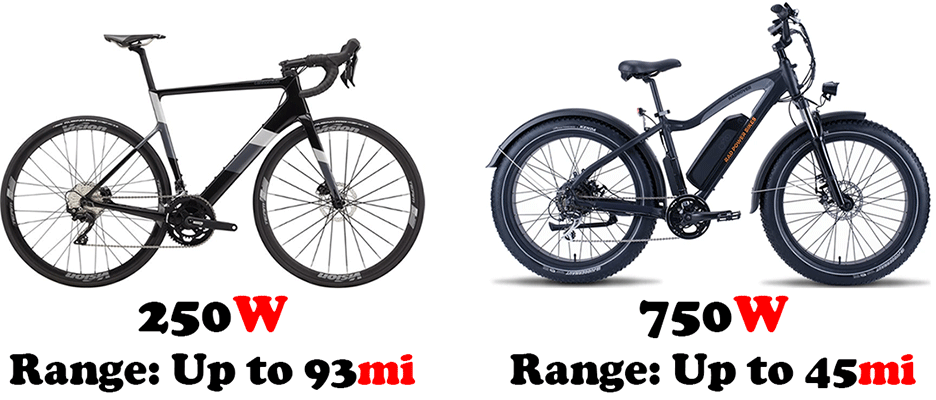
Cannondale SuperSix NEO EVO vs Rad Power Bikes RadRover – Both bikes use a rear hub motor, demonstrating the discrepancies across bikes with similarly designed motors.
The range is the amount of time or mileage you’ll get out of one battery charge on your e-bike and is often one of the most important points for buyers when comparing e-Bike models.
Depending on the e-Bike class, the bike’s range can vary a lot.
For some bikes, the stated 20-45miles range means that a 20-mile trip can be reached by using the throttle-only assist, and the maximum of 45mi using the pedal-assist. Other times, 20mi is reached by a heavy rider using the motor on steep hills, etc. 45mi is when the motor is used in ideal conditions, on flat grounds.
A 500Wh hub motor has a range of around 30 miles, whereas a mid-drive motor can take you up to 40-50 miles due to the increased efficiency.
Let’s compare two very different electric bikes below and see how their unique characteristics affect the range.
Cannondale SuperSix EVO Neo 3 (Rear Hub Electric Road Bike)
Bike weight: 28lbs
36V 6.9Ah – 250Wh Battery – 250W
*Provides 36V at 6.9V of power for one hour, or 18V at 3.5V for two hours.
The SuperSix EVO has a longer advertised range than the RadRover. The pedal-assist works until the rider reach a max speed of 28mph. Additionally, the constant power output is helped by efficient and constant pedal-power with the motor.
Smoother transitioning = longer range.
Rad Power Bikes – RadRover (Rear Motor Electric Fat Bike)
Bike weight: 69lbs
48V 14Ah – 672Wh – 750W
*Provides 48V at 14Ah of power for one hour, or 24V at 7V for two hours.
Conclusion: A lighter bike (Cannondale) with a smaller motor provides a better estimate range due to different aspects. It is not only the power of the motor, but also the weight of the bike, usage of throttle, tire width, and much more.
Other factors that determine the e-bike range:
- Weight of the rider
- Wind
- Terrain
- Pedaling effort
- How much power is used
- Motor efficiency and mode used while riding
- Weight of the bike, wheel size, tire width, tire pressure
3 . Price
While rear hub motors are typically seen on lower-cost e-bikes, some high-end bikes are equipped with a rear hub motor too.
Why are hub motors less expensive than mid-drives?
Hub motors are generally cheaper because the build is less complex compared to center-driven electric bike motors (Which includes creating a specific frame around the bike frame).
*That doesn’t mean hub motors are not as durable.
Many expensive eBikes brands, such as the Stromer, have produced a series of eBikes that cost up to $8,000 that are equipped with a rear hub motor.
The electric bike price range (On average) is divided into:
Rear hub – $1,000 – $3,000
Mid-drive – $2,000 – $8,000
- $500-$1,000 – Entry level eBikes with rear hub motor
- $1,000 – $1,500 – Entry/mid-range eBikes with rear hub motor
- $1,500 – Mid-range rear hub motor eBikes
- $2,000 – Mid range rear hub, entry level mid-drive eBikes
- $2,500 – High-end rear hub, mid-range mid-drive eBikes
- $3,000 – High-end rear hub, mid-range mid-drive eBikes
- $4,000 – Mid-range full-suspension electric mountain bikes
- $5,000 – High quality mid-drives on almost all e-bike disciplines
People Also Ask
Why are so many electric bikes fat bikes?
Many electric bike brands have released at least one or more models in their range that can be classified as fat tire electric bikes.
Is it a trend or is there a special purpose behind it?
The reason is that fat tire bikes are ideal to travel on light trails, sand, mud, city parks, and many mixed terrains with great comfort. Fat tires are mainly used with a rigid fork which means there is no need for extra suspension as the thick tires absorb the bumps well by not losing any energy through the front fork.
Fat tire eBikes give the rider a feel like they are riding a motorcycle.
*Fat and wide tires on a bicycle also forgive many mistakes for beginner cyclists. “Mistakes” such as choosing a wrong lane on a tight trail, or riding over a rain gutter where thinner tires can fall into, and create a hazard in the traffic.
What to avoid doing with eBike motors?
For the best life expectancy of your eBike, always use the electric bike according to the manufacturer’s recommended use.
- Instead of going full throttle all the time, try using a smoother approach so that the motor engages smoothly, not by overusing the engine
- Overloading the max capacity
- Avoid going over sharp edges with a mid-drive eBike (or any other bicycle) as the motor is placed at the lowest point of the downtube.
How much does it cost to maintain an e-bike?
Getting a new electric bike means you’ll get a warranty, which means any motor or electronic failures when the bike is under manufacturer recommended use should be covered for a specified amount of time.
However, if you’re out of warranty and there is a motor failure, mid-drive motors are more expensive to repair or replace compared to hub motors.
Are mid-drive electric bikes the future?
At the increasing rate at which the electric bike industry is progressing, the convenience of mid-drive electric bikes is most likely going to continue. Similar to groupset technology, the motor technology should trickle down into lower-spec models in the future, so you’ll be able to buy quality for less.
Who knows what will be next?
Right now, there are three electric bike motors: front hub, hub motor, and mid-drive eBike motors.
Are the mid-drive electric bikes going to get cheaper?
As mid-drive (center-driven) electric bikes are considerably more expensive than the hub-motor eBikes for obvious reasons, we shouldn’t predict a big price drop anytime soon. However, the affordability rates are increasing due to the mass-production and availability of mid-drive motors.
Which electric bike brand do we recommend?
Here at Bikexchange, we are well aware of the eBike-specific bike brands: Rad Power Bikes, Ride1Up, and QuietKat. From our experience, these are the most trusted brands to buy electric bikes from.
Какие бывают мотор-колеса?
Мотор-колесо (далее МК) — это основной тип двигателя, применяемый в электровелосипедах на сегодняшний день. Если говорить простым языком, это втулка, интегрированная с электрическим двигателем.
МК производят двух основных типов. Каждый тип обладает своими преимуществами и недостатками.
Редукторное МК (Geared Hub Motor) — легко догадаться, что в конструкции колеса присутствует редуктор с соотношением 1:4 или 1:5. Такими двигателями оснащают большую часть велосипедов, продающихся на сегодняшний день в России. Вопреки распространенному мнению, довольно надежные и прекрасно работают без ремонта при выполнении нехитрых правил эксплуатации. Холостой ход обеспечивает фривилл, который при движении с выключенным двигателем блокирует статор относительно ротора таким образом, что он не мешает движению.
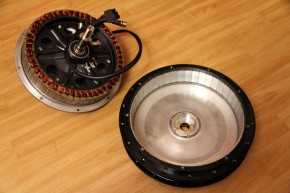
Преимущества редукторных МК: низкий вес, сочетание тяговых и скоростных характеристик
Недостатки редукторных МК: низкая максимальная мощность, необходимо более частое ТО, склонность к поломкам при стрессовых режимах и безграмотной эксплуатации (поломки шестерёнок или фривила), отсутствие рекуперации энергии
Безредукторное МК (Direct-Drive Hub Motor) — мк с прямым приводом, то есть передача крутящегося момента осуществляется непосредственно от статора ротору. Статор крепиться к оси, а ротор является частью крышки, через которую крутящий момент передается на колесо. Очевидно, что такая конструкция при движении на холостом ходу или педалях будет работать как генератор и возникающая электродвижущая сила будет вызывать сопротивление свободному качению. Однако, в интернете показатели эти значительно завышаются.
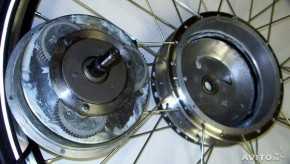
Преимущества безредукторного МК: простота и надежность конструкции, рекуперация энергии.
Недостатки безредукторного МК: большой вес, узкий диапазон наиболее эффективных режимов работы.
Hub motor vs mid-drive: which is best?
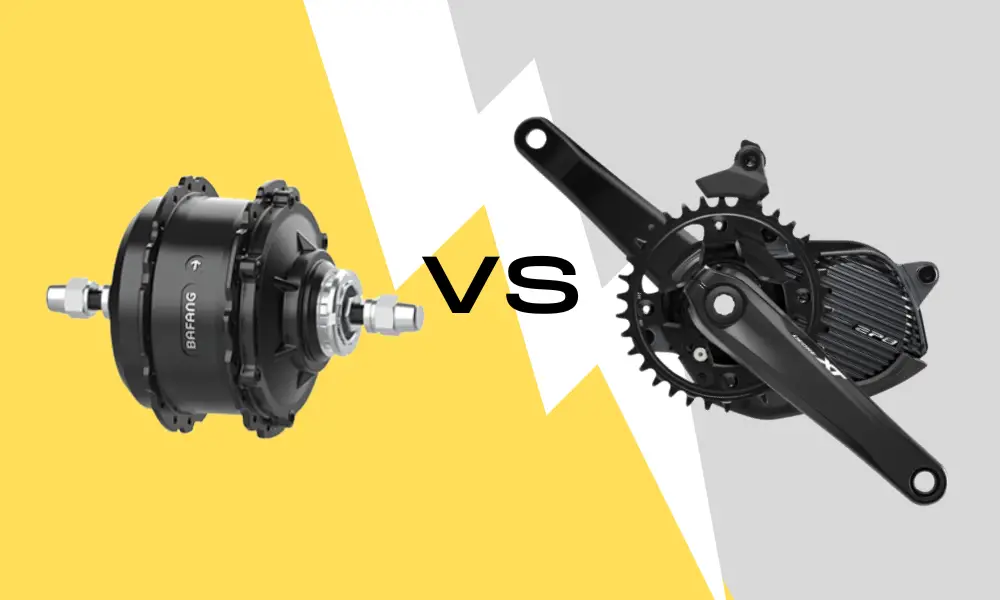
As electric bikes continue to grow in popularity, potential buyers are faced with a crucial decision: choosing between a hub motor vs a mid-drive motor. This decision is relevant whether you are buying a new e-bike or converting a bike you already own with a DIY conversion kit.
Both types of motors have advantages and disadvantages, making the choice far from straightforward. In this article, we’ll take a closer look at the different characteristics of hub and mid-drive motors, look at the pros and cons, and help you decide which option is suitable for you.
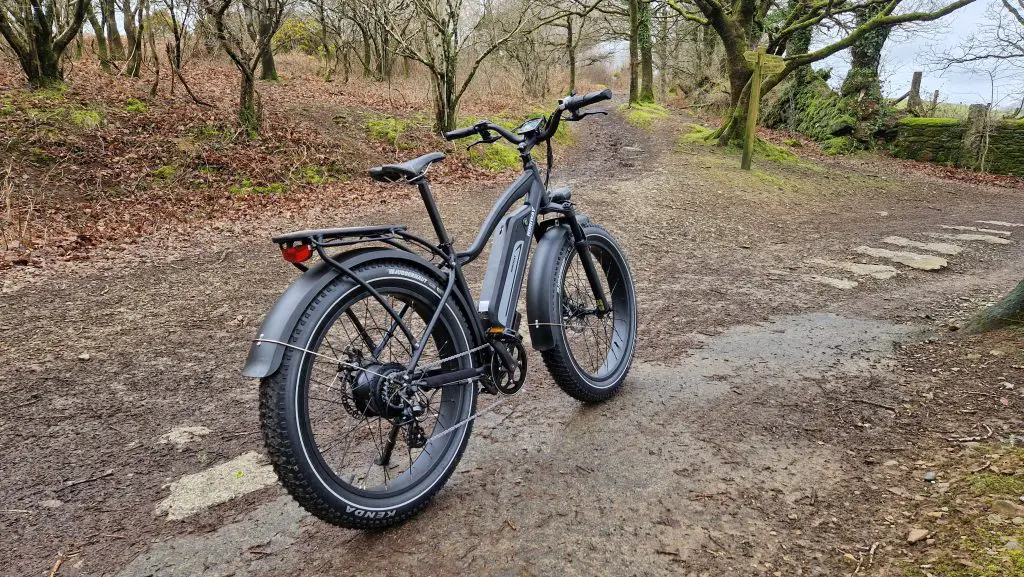
An electric fat bike powered by a hub motor
Understanding electric bike motors
Before diving into the comparison, it’s essential to have a basic understanding of electric bike motors. These motors are the driving force behind e-bikes, providing power assistance to the rider, making pedalling easier, and enhancing overall performance.
- Hub Motors: Located in the centre of either the front or rear wheel, hub motors directly power the wheel they’re attached to.
- Mid-Drive Motors: Positioned at the bike’s bottom bracket (where the pedals and crankset are located), mid-drive motors send power to the rear wheel via the bike’s chain, providing extra drive to the rear wheel.
Now that we have a general understanding of e-bike motors let’s dive deeper into the differences between hub and mid-drive motors.
Hub motor: pros and cons
Hub motors have been around for longer than most people realise. The first electric hub motor was invented by Frenchman Charles Theryc and patented in 1896. Today, they are widely used in electric bikes ranging from budget options to premium models. Below we’ve listed some of their most notable advantages and disadvantages:
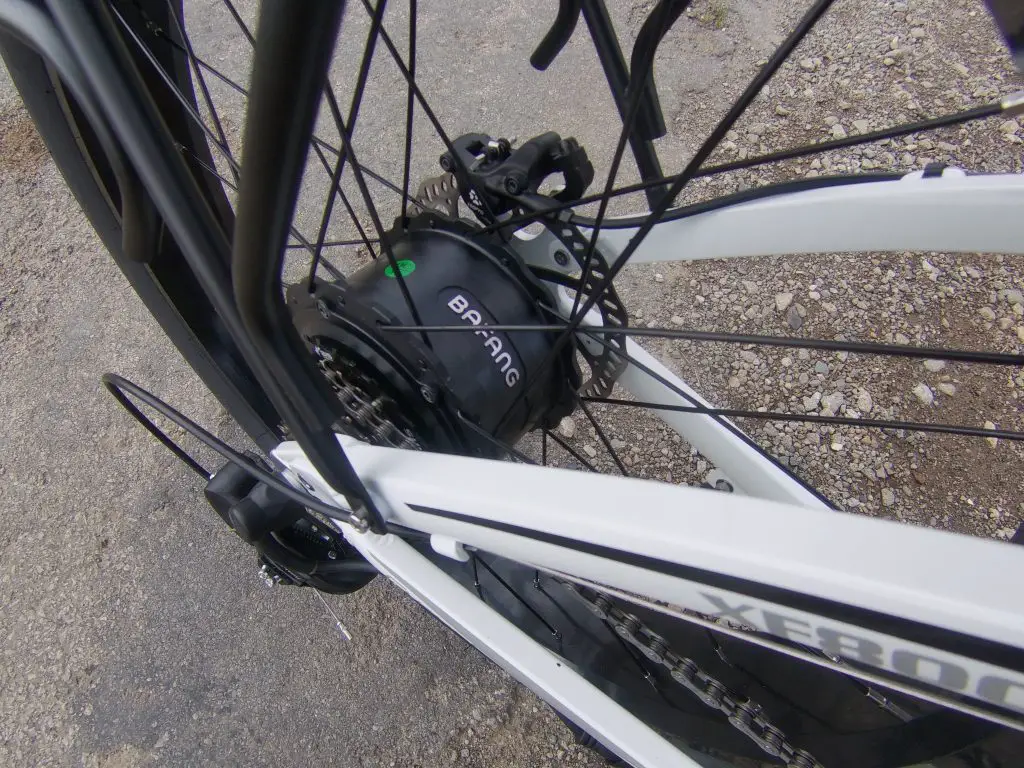
A Bafang rear hub motor
Pros of hub motor
- Simplicity: Hub motors are straightforward in design requiring fewer moving parts, making them lightweight and easy to maintain. Their self-contained nature reduces the chances of mechanical complications, such as chain-related issues.
- Cost: Generally speaking, hub motors are less expensive than their mid-drive counterparts. Their relatively simple construction with fewer internal components often results in a lower overall price, making them a popular option on budget e-bikes. They are often cheaper and easier to repair than mid-drives.
- Stealth and Quiet Operation: Due to their location, hub motors are often more discreet than mid-drive motors. They also tend to operate more quietly, allowing for a less noisy riding experience.
- Efficient on Flat Terrain: Hub motors perform well on flat surfaces, providing a smooth, consistent power output. They’re an excellent choice for casual riders and commuters who primarily travel on flat routes.
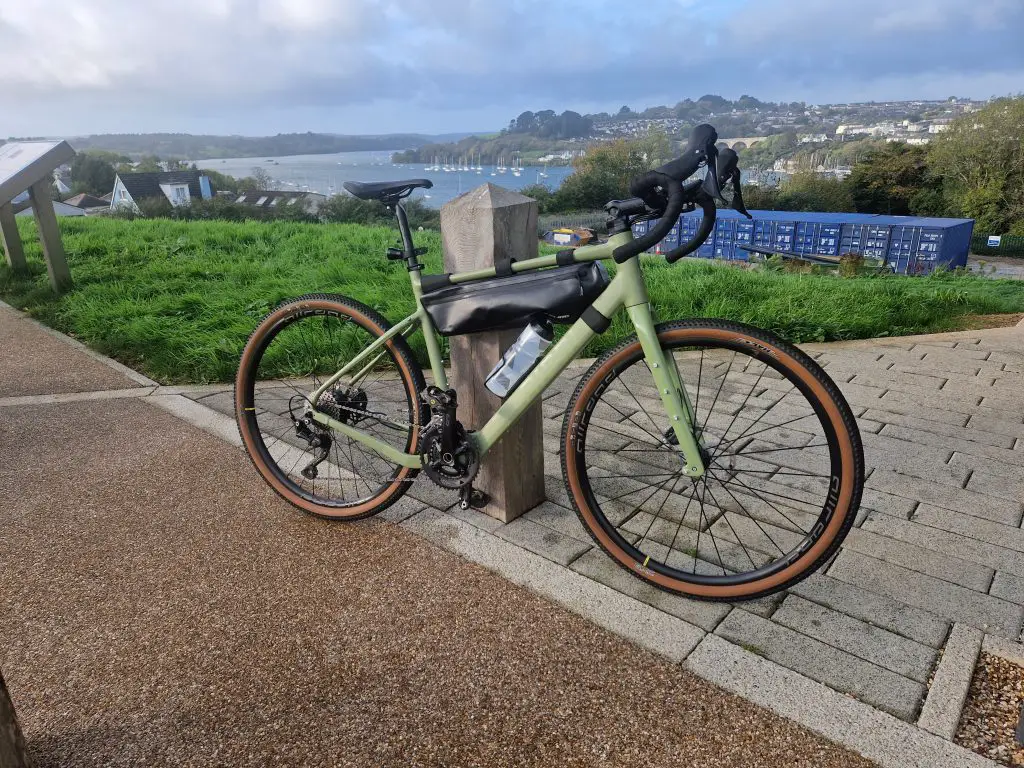
The Ribble Gravel AL e powered by a discreet hub motor
Cons of hub motors
- Less Torque and Hill Climbing Ability: Hub motors generally provide less torque than mid-drive motors, resulting in diminished hill-climbing ability. Riders who frequently encounter steep inclines may find hub motors less capable of providing adequate assistance.
- Weight Distribution: Hub motors add weight to either the front or rear wheel, depending on their placement. This uneven weight distribution can negatively impact handling and overall ride quality. In addition, the extra weight of the wheel can make them more susceptible to broken spokes.
- Less Efficient on Varied Terrain: Hub motors tend to be less efficient when riding on uneven terrain or in changing conditions. As a result, they may not be the best option for riders who regularly ride off-road trails.
Mid-drive motor: pros and cons
Mid-drive motors have gained popularity in recent years, thanks to their strong performance, high torque output and efficiency. Below, we’ll explore their most significant advantages and disadvantages:
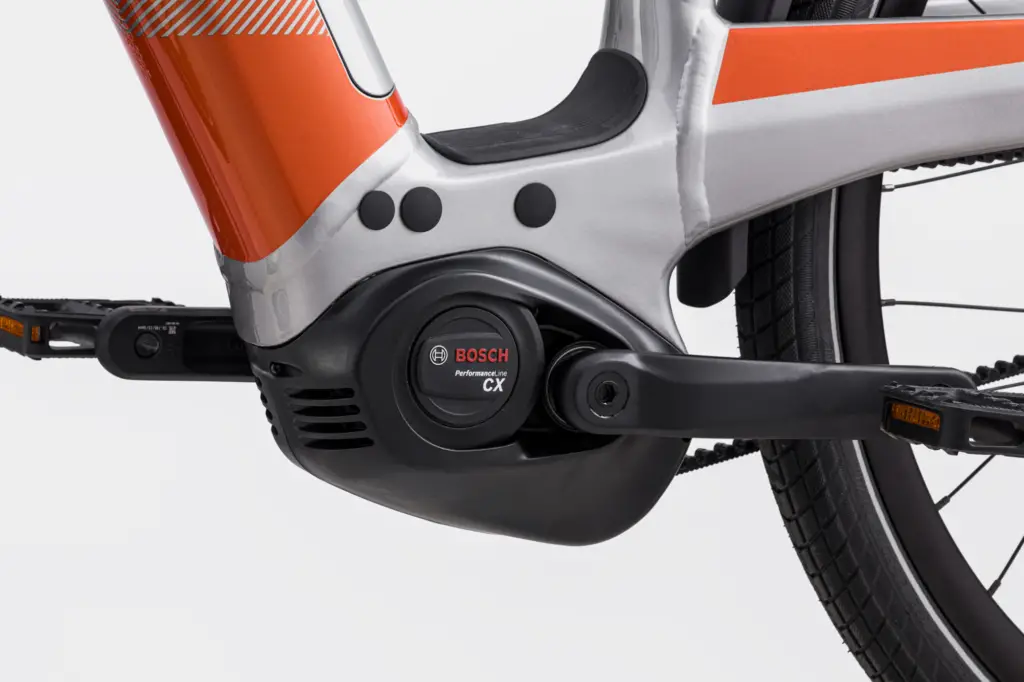 A Bosch mid-drive motor
Pros of mid-drive motors
- Torque and Hill Climbing Ability: Mid-drive motors are known for their impressive torque output, making them well-suited for tackling steep hills and off-road terrain. They excel in providing power assistance when it’s needed most, making them an attractive option for riders who frequently face challenging inclines or off-road trails.
- Weight Distribution: Because mid-drive motors are positioned at the bike’s bottom bracket, they help maintain a more balanced weight distribution. This even distribution of weight can improve handling and overall ride quality, particularly during cornering and manoeuvring.
- Efficiency: Mid-drive motors take advantage of the bike’s existing gears, allowing riders to optimize their power output based on the terrain and riding conditions. This feature can result in more efficient power usage and longer battery life, especially when faced with varied terrain.
- Maintenance and Compatibility: Since mid-drive motors don’t directly affect the wheels, they’re compatible with a wider range of wheel types and sizes. Additionally, maintenance tasks, such as changing a flat tire or servicing the brakes, are typically easier with a mid-drive motor setup.
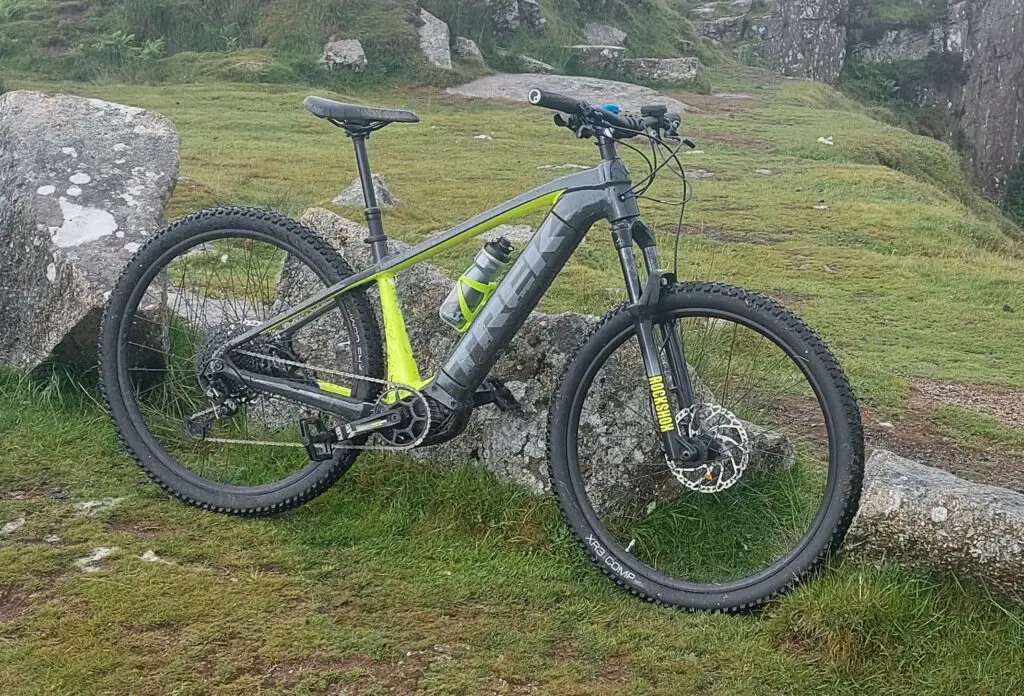
A Trek Powerfly 5 e-MTB powered by a Bosch CX mid-drive
Cons of mid-drive motors
- Cost: Mid-drive motors tend to be more expensive than their hub motor counterparts. Their more complex construction, higher torque output, and overall performance often come at a premium, making them a less budget-friendly option. In addition, they’re more expensive to fix if they do go wrong outside of warranty.
- Increased Wear on Drivetrain Components: The added torque and power provided by mid-drive motors can lead to increased wear on drivetrain components, such as the chain, cassette, and derailleur. This wear may result in more frequent maintenance and replacement of these components.
- More Complex Installation and Maintenance: If you’re converting a bike to electric using a mid-drive motor like the Bafang BBS02B, Installing and maintaining it can be more complicated than a hub motor due to its integration with the bike’s gears and other components. This complexity may require more technical knowledge and expertise.
Hub motor vs mid-Drive: which is best?
- Budget: If you’re on a limited budget, a hub motor is nearly always the more affordable option. However, it’s essential to weigh the cost savings against the performance and efficiency advantages offered by mid-drive motors.
- Terrain and Riding Conditions: If you primarily ride on flat terrain and don’t require significant hill-climbing assistance, a hub motor may be a suitable choice. However, if you frequently encounter steep inclines or off-road trails, a mid-drive motor’s superior torque and efficiency may be worth the investment.
- Maintenance and Compatibility: If you’re looking for a low-maintenance option, hub motors are generally more reliable and put less of a strain on the bike’s drivetrain than a mid-drive motor.
- Weight Distribution and Handling: For riders who prioritize optimal weight distribution and handling, a mid-drive motor is the preferred option. However, if these factors are not as important to you, a hub motor can still provide a smooth and enjoyable ride.

Admiring the Ribble Gravel – Lightweight with a small hub motor
Ultimately, the decision between a hub motor and a mid-drive motor comes down to your specific needs, preferences, and budget. Both options have their good and bad points, so it’s important to carefully consider your abilities, the kind of terrain you’ll be riding on, and your ability to maintain the bike before making a decision. By taking the time to consider these factors, you’ll be well on your way to finding the perfect electric bike motor for your needs.
Further reading
Meet Tony, a passionate e-bike advocate and enthusiast who discovered the life-changing benefits of electric bikes back in 2016. Tony’s technical experience within the e-bike field was gained while running a successful electric bike conversion business for 5 years in his home county of Cornwall, UK.